

Wege Prize
Wege Prize
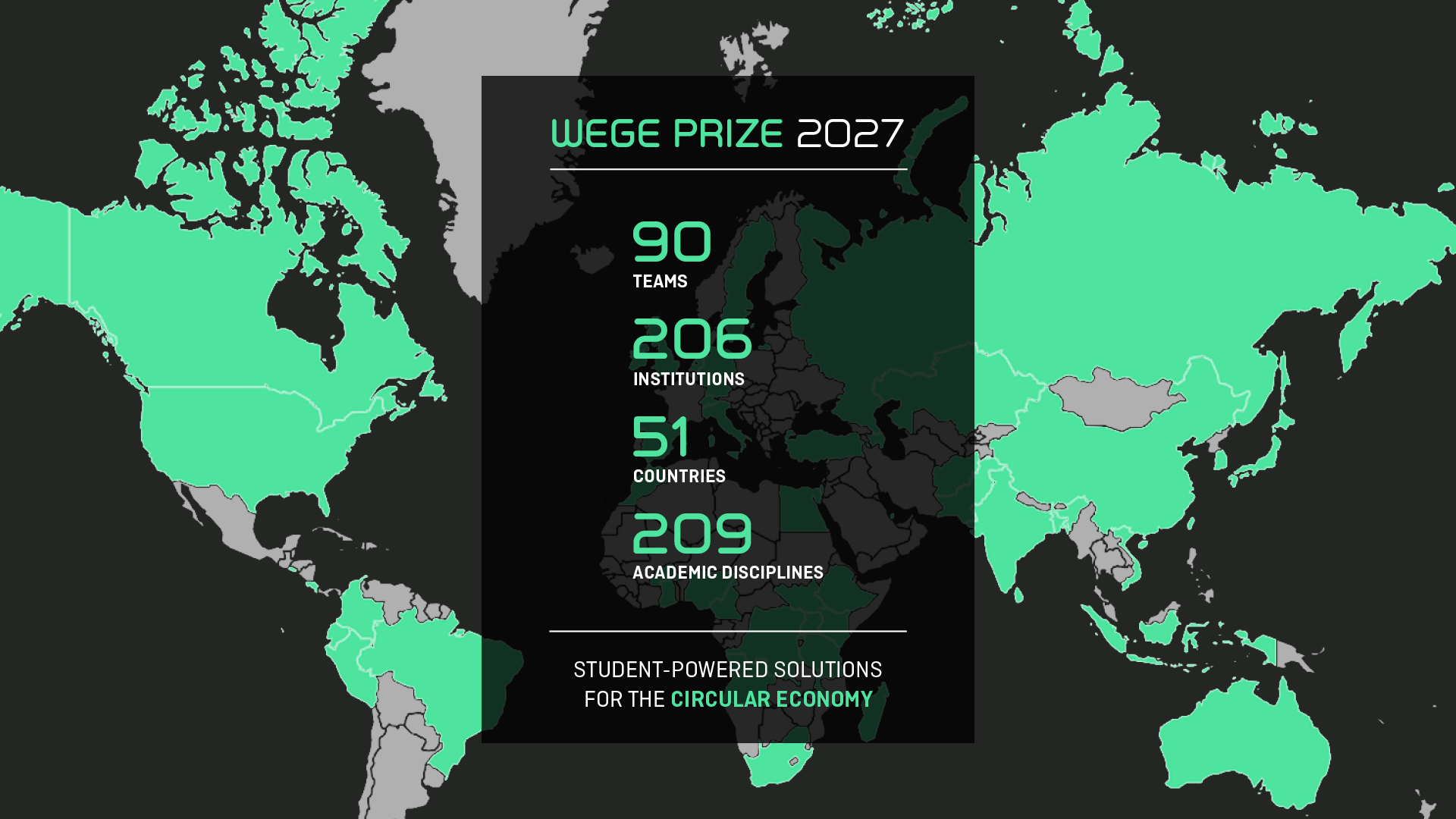
Wege Prize 2027: By the Numbers
What is Wege Prize?
Part design competition, part global learning lab—Wege Prize challenges transdisciplinary teams of university students to develop real-world solutions to complex, “wicked” problems through the framework of the circular economy.
Team applications for Wege Prize 2028 will open in fall of 2027.
Build Your Team
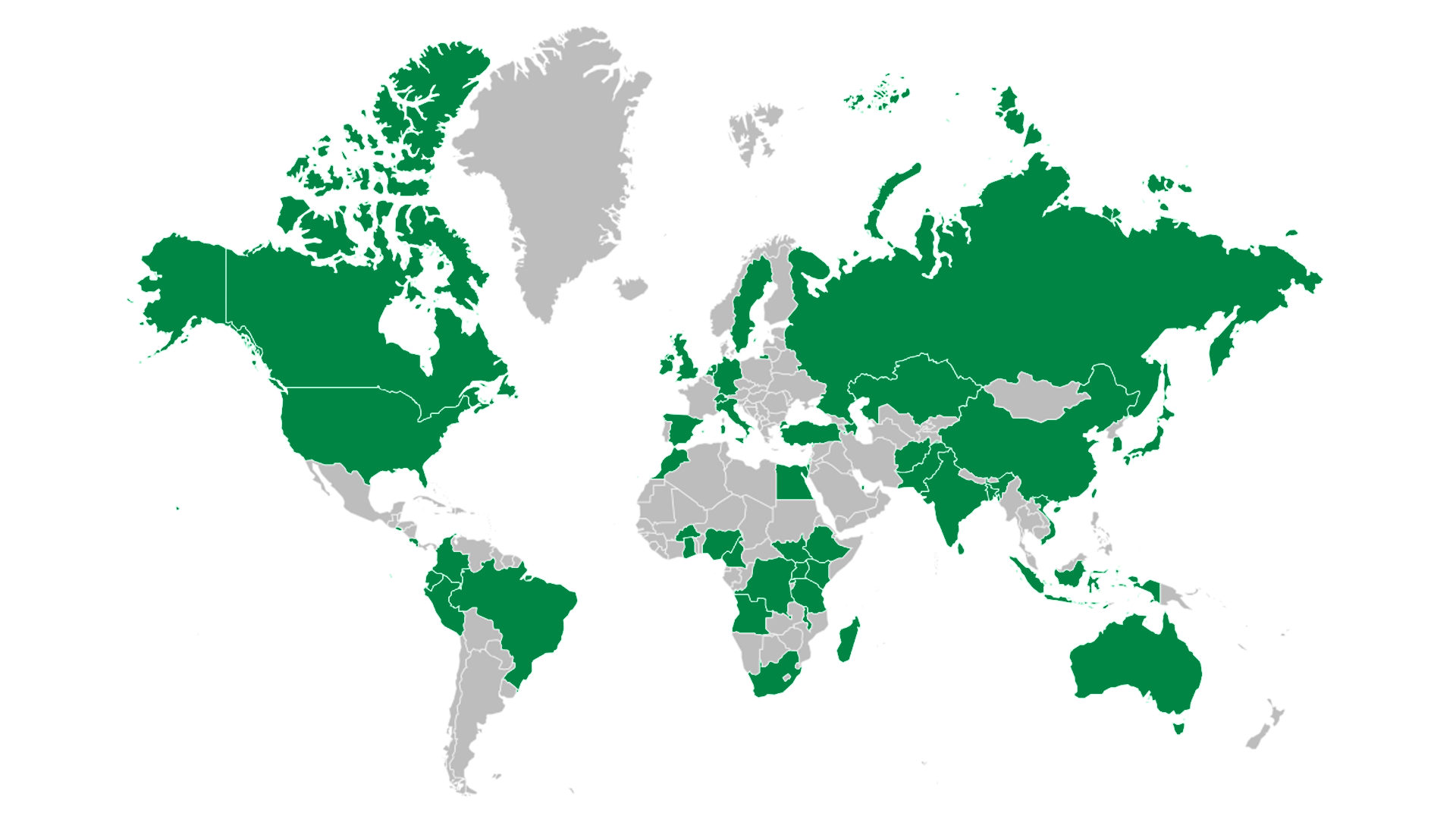
Wege Prize challenges teams to collaborate across boundaries, with each team representing:
- Open to undergraduate, graduate, and post-graduate students worldwide
- Academic discipline defined by current major of study/name of academic program
- Schools/colleges within larger universities count as separate institutions
Develop a Circular Solution
Propose a product or service that solves a wicked problem while making circular design its differentiator.
Evolve your solution through an iterative design process driven by in-depth feedback loops with Wege Prize judges at each phase.
The Four Phases
Compete for $65K in Prizes
What Sets Wege Prize Apart
Judges who coach—not just score
Wege Prize judges provide direct, in-depth feedback at every phase, helping your team refine and evolve your solution as the competition progresses. More than a score, we want teams to walk away with a transformative learning experience.
Your ideas stay yours
Your solution and everything that goes into it remain your intellectual property from the moment you submit—yours to develop, pitch, and build on however you choose. Wege Prize exists to strengthen the work your team does, never to lay claim to it.
Transdisciplinary teams by design
Wicked problems reach across boundaries, and so do we. In converging different perspectives, expertise, and strengths, Wege Prize teams mirror the kind of cross-functional collaboration it actually takes to solve complex problems in the real world.
All circular projects are welcome
There’s no single “right” kind of solution here. Whether you’re developing a circular product or service from the ground up or using circular design to uncover new opportunity in something that already exists—you belong in this competition.
What is the circular economy?
What is the circular economy?
The circular economy transforms our throwaway linear system into one where materials never become waste and our activities replenish the natural world. It gives us the tools to redesign every element—from how we manage resources, to how we make and use products, to what we do with the materials afterwards—creating an economy that thrives on resilience instead of consumption.
Wege Prize challenges teams to use circular design to develop products and services that create unique value, solve real-world problems, and benefit people, businesses, and the environment.
THE CIRCULAR ECONOMY / THREE CORE PRINCIPLES
1 - Eliminate waste and pollution
by redefining them as flaws to be designed out of the things we make rather than inevitable by-products.
2 - Circulate products and materials
at their highest utility and value using processes like maintenance, reuse, refurbishment, remanufacture, and composting.
3 - Regenerate nature
through practices that rebuild soils, increase biodiversity, preserve water systems, and return biological materials to the earth.
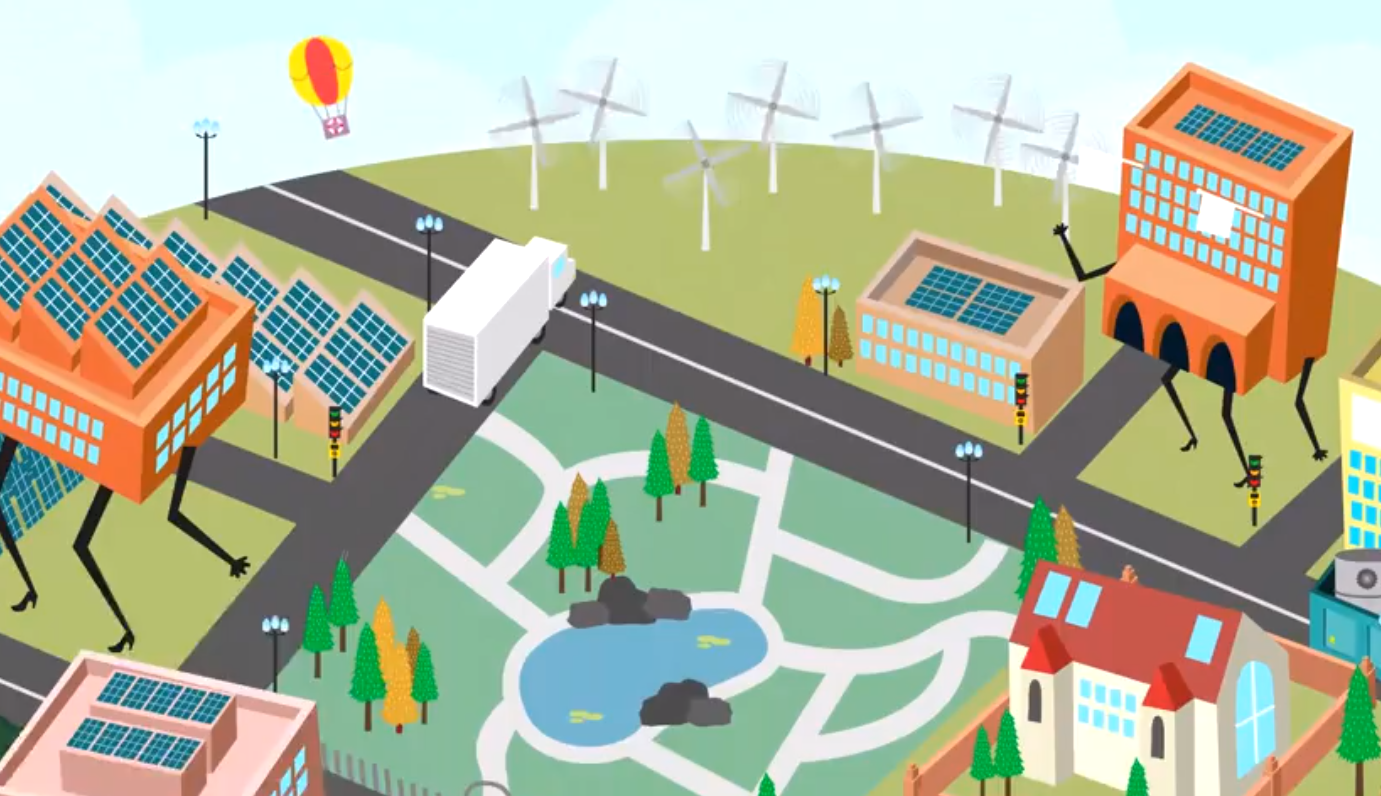
What is the circular economy? What does it look like in practice? Who's doing it now? And how can you get involved? Watch the above video from the Ellen MacArthur Foundation to learn more!
The Ellen MacArthur Foundation
The Ellen MacArthur Foundation was launched in 2010 to accelerate the transition to a circular economy. Since its creation the charity has emerged as a global thought leader, establishing the circular economy on the agenda of decision makers across business, government, and academia.
“We are trying to change a system, not one business. We need to change the way people think, the way things are designed, the materials that are put into them.”
Recent News
Recent News
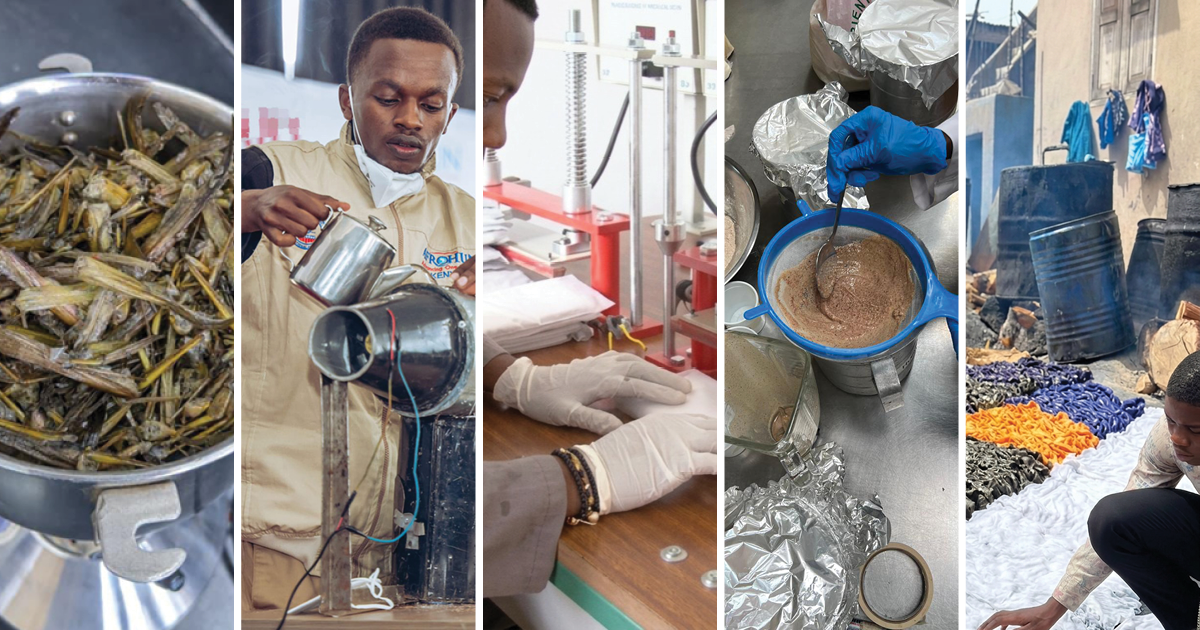

South Sudanese students win top honors by transforming a key water contaminant into a solution for malnutrition.